
 DRAX Power Station:
A 50-Year Testament to Thermodynamic Waste
From Yorkshire Coal to American Wood Pellets: The Persistence of Centralised Inefficiency
A Critical Analysis Based on Direct Experience, 1975-2026
Introduction: An Engineer's Perspective
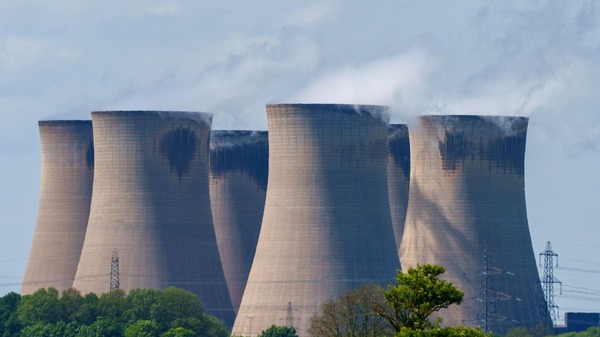
In 1975, as an undergraduate student pursuing a degree in Building Technology, Finance and Management (1972-1976), I was assigned to an industrial training placement with Norwest Holst in Leeds. My task was to contribute to the estimation & planning programme for the construction of the cooling towers - 114m high (built in phases - now 12 Cooling Towers) at the newly developing DRAX Power Station in North Yorkshire. Those towers, each a massive concrete structure, represented more than mere engineering ambition—they were physical monuments to thermodynamic waste, the unavoidable consequence of the Carnot cycle's limitations when applied to centralised thermal power generation.
At that time, DRAX—along with Eggborough and Ferrybridge coal-fired stations built atop the vast Selby Coalfield—was designed to achieve approximately 22% fuel efficiency in converting coal to electricity for the Central Electricity Generating Board (CEGB). This figure is not a detail; it is the fundamental indictment of the entire enterprise. With 22% efficiency, approximately 78% of the energy content of the coal became waste heat, requiring those eight cooling towers to dump it into the atmosphere. The UK was, in effect, burning five times the coal it would have needed had it pursued decentralised combined heat and power (CHP) systems, which can achieve 80-90% total efficiency by productively using the "waste" heat.
This article examines DRAX's transformation from coal to biomass burning, analysing why this change—despite being lauded as "green"—represents merely a continuation of the original thermodynamic sin, now compounded by international wood pellet transport, forest destruction, and elaborate carbon accounting fraud.
The Original Sin: Engineering Waste into the Foundation
The Carnot Cycle and the Cooling Towers
Those eight/ten cooling towers at DRAX were the engineers' answer to the inescapable reality of the Carnot efficiency limit. In a thermal power station, fuel combustion creates high-temperature steam to drive turbines. The second law of thermodynamics dictates that converting this thermal energy to mechanical work (and thence to electricity) cannot be 100% efficient. The lower the temperature differential between the heat source and the cooling reservoir, the lower the theoretical maximum efficiency.
At 22% electrical efficiency, DRAX operated well within these thermodynamic constraints, but at an enormous cost to fuel consumption and environmental impact. The cooling towers I helped plan were not incidental infrastructure—they were essential to the fundamental design choice to burn coal for electricity alone, discarding the majority of the energy as waste heat.
This contrasts starkly with decentralised CHP systems, where the "waste" heat is not waste at all, but rather a valuable product delivered to nearby buildings for space heating and hot water. By integrating electricity generation with district heating, CHP systems achieve total efficiencies of 80-90%—nearly four times DRAX's efficiency.
A Family Lesson: Knottingley Power Station
In the early 1990s, when driving from our home in York to visit relatives near London, my family and I would pass Knottingley Coal Fired Power Station on the A1/M1. Every single time, I would point out the six cooling towers and tell my children:
"Those towers are a testimony to waste."
The waste heat being expelled from those towers could have provided a comprehensive district heating network for the town of Knottingley itself, which sat in close proximity to the power station.
The same principle applied to the iconic Battersea Power Station in central London. Rather than integrating the power station into a heat network for London's buildings, the waste heat was simply dumped. This represented an extraordinary missed opportunity—not just for fuel efficiency, but for reducing the UK's overall coal consumption and the environmental damage it caused.
The Transboundary Crime: UK Coal and Scandinavian Forest Destruction
Acid Rain and Yorkshire Coal's High Sulphur Content
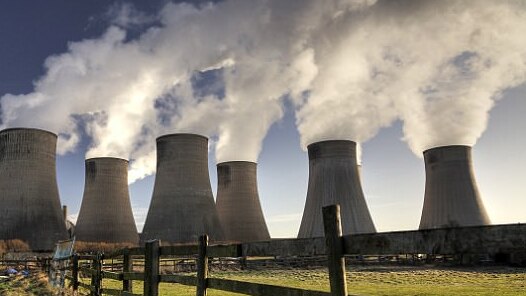 During the 1970s and 1980s, as DRAX and stations like it burned vast quantities of high-sulphur Yorkshire coal, the environmental damage was not confined to the UK. Swedish scientists established a network of 49 sampling stations across the UK and Scandinavia beginning in 1954, meticulously documenting the chemical fingerprints of British coal in Norwegian and Swedish air and water samples.
In 1967-68, Swedish scientist Svante Odén published findings showing that large-scale acidification of Swedish lakes could be attributed directly to pollution from the United Kingdom and central Europe. Analysis of 600 Swedish lakes revealed increasing acidity and catastrophic declines in salmon and other fish populations. Norway suffered similarly, with an estimated 75% of acid deposits originating from other countries—primarily the UK.
The mechanism was straightforward but devastating: sulphur dioxide (SO₂) from coal combustion combined with atmospheric moisture to form sulphuric acid, which fell as acid rain across Scandinavia. By the 1980s, approximately 15,000 Norwegian fish stocks had been lost or affected by acidification. In Sweden, fishery damage was observed in 2,500 lakes and assumed to affect 16,000 of the country's 85,000 lakes and 100,000 kilometres of rivers.
The UK's Resistance and the Thermodynamic Connection
The UK government and particularly the Central Electricity Generating Board (CEGB)—Britain's largest polluter—repeatedly denied the connection between UK sulphur emissions and Scandinavian acidification, claiming remedial action would be "incredibly expensive." This resistance persisted despite overwhelming scientific evidence and mounting international pressure throughout the 1980s.
Here the connection to thermodynamic efficiency becomes crucial: had the UK adopted decentralised CHP systems achieving 80-90% efficiency rather than centralised stations at 22% efficiency, the nation would have burned approximately one-fifth the coal for the same useful energy output. The sulphur dioxide emissions—and consequently the acid rain damage to Scandinavian ecosystems—would have been proportionally reduced.
Put simply: the UK's choice of thermodynamically inefficient centralised power generation didn't just waste fuel—it quintupled the environmental damage exported to neighbouring countries. Those ten cooling towers at DRAX represented not just domestic waste, but international environmental harm.
The Parliamentary Record
Parliamentary debates from 1985 document the severity of the crisis. One MP reported that on 20 February 1984, "a deep layer of sooty snow was deposited in the Cairngorms" carried by air currents from English midlands and south Yorkshire coal-fired power stations. The black snow led to fish kills in west Highland waters. Norwegian parliamentarians were, diplomatically, reluctant to blame UK emissions when hosting British delegations, though prevailing wind patterns made the connection inescapable.
The problem was eventually addressed through installation of flue-gas desulphurisation ("scrubbers") and fuel switching, but the damage to Scandinavian ecosystems—lakes, rivers, and forests—persisted for decades. Some Norwegian lakes remain too acidic for fish populations even today, requiring ongoing liming programmes.
The Coal-to-Biomass Transition: Carbon Accounting Fraud
From Yorkshire Coal to American Wood Pellets
Sometime in the early 2000s, policy-makers decided that coal was environmentally unacceptable. Rather than addressing the fundamental thermodynamic inefficiency of centralised thermal generation, DRAX embarked on a transformation to burn wood pellets—importing them primarily from the southeastern United States (60%), Canada (22%), and the Baltic States (11%).
This transition has been marketed as a climate solution. DRAX claims to be "carbon neutral" and even aspires to become "carbon negative" through bioenergy with carbon capture and storage (BECCS). The reality, however, is quite different.
The Carbon Emissions Reality
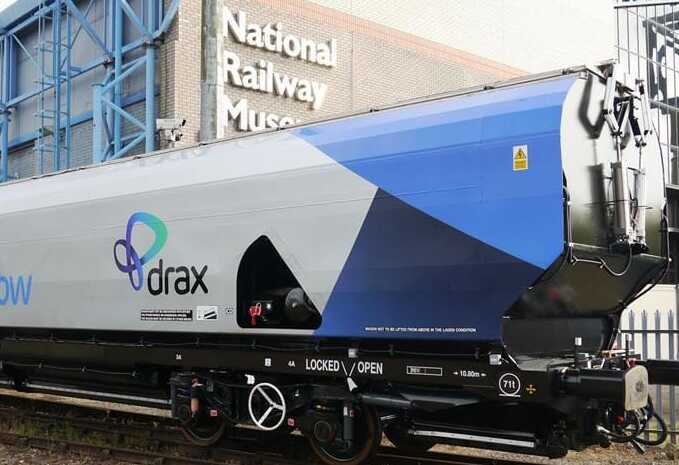 In 2021, DRAX's wood burning emitted 13.42 million tonnes of CO₂—making it the UK's single largest source of carbon emissions. Wood burning releases approximately 130kg of CO₂ per unit of energy, compared to 103kg for anthracite coal and 67kg for natural gas. Per unit of electricity generated, biomass emits more CO₂ than the coal it replaced.
Yet DRAX claims an 85% emissions reduction since 2012 when it began the coal-to-biomass transition. This apparent paradox is resolved through carbon accounting rules that count biomass combustion emissions as "zero" at the point of burning, based on the assumption that new tree growth will eventually reabsorb the CO₂. This accounting trick, embedded in international frameworks and UK law, allows DRAX to exclude nearly 70% of its total emissions from its official carbon footprint.
The Carbon Debt Problem
The claim of carbon neutrality assumes that forests regrow at the same rate as they are harvested. In reality, forest regrowth takes 44-104 years. During this period, the CO₂ remains in the atmosphere. More than 500 scientists wrote to world leaders in 2021 highlighting that while "regrowing trees and displacement of fossil fuels may eventually pay off this carbon debt, regrowth takes time the world does not have."
Furthermore, DRAX's suppliers have been repeatedly documented harvesting whole trees from primary and old-growth forests in British Columbia, despite company claims to use only wood waste. BBC investigations and DRAX's own internal emails acknowledged it was "highly likely" they had burned wood from environmentally important old-growth forest areas.
The Supply Chain Impact
In 2021, DRAX burned 8.3 million tonnes of wood pellets made from approximately 16.6 million tonnes of freshly cut wood—equivalent to 155% of the UK's entire annual wood production. The pellets are manufactured in facilities concentrated in poor, predominantly Black communities in the southeastern United States.
DRAX's pellet plant in Gloster, Mississippi (population 77.1% Black, poverty rate 41.4%) has violated air permits every year since opening in 2015, receiving a $2.5 million fine in 2021 for emitting three times permitted air pollution levels. Residents report respiratory problems from toxic emissions including PM2.5, formaldehyde, and hazardous air pollutants. Similar facilities across the southeastern US have broken environmental regulations over 11,000 times collectively.
The biomass pellets are then shipped across the Atlantic on diesel-powered freighters, adding substantial transport emissions that, like the combustion emissions, receive favourable accounting treatment under current frameworks.
The Subsidy Scandal: £7+ Billion and Counting
Since 2012, DRAX has received approximately £7 billion in public subsidies for burning biomass—more than £2 million per day in 2024 alone (£869 million total). These subsidies, paid through surcharges on electricity bills, have been justified on grounds that biomass is "renewable" energy deserving of support comparable to wind and solar.
The comparison is instructive: wind and solar generation, which provide genuine emissions reductions, are now effectively subsidy-free. DRAX, which emits more CO₂ than the UK's largest gas power plants, continues to receive enormous public support. Current subsidies run until 2027, but the UK government announced in 2025 an extension through 2035 at reduced rates, which would add £11.5 billion to DRAX's total subsidy haul, bringing the 2012-2035 total to £21.6 billion.
For context: these subsidies add approximately £11-14 annually to every UK household's energy bill. Money far better spent upon improving the thermal insulation of the aging UK's 25 million homes.
BECCS: Layering Inefficiency Upon Inefficiency
The Carbon Capture Promise
DRAX's current strategy centres on Bioenergy with Carbon Capture and Storage (BECCS)—capturing CO₂ from biomass combustion and storing it geologically. The company claims this will make it "carbon negative" by 2030, removing 8 million tonnes of CO₂ from the atmosphere annually.
This proposal attracted government approval in 2024, but independent analysis suggests profound problems. Carbon capture technology itself imposes an "energy penalty" of 20-30% of a plant's generating capacity—meaning DRAX would need to burn even more wood pellets to operate the capture equipment, further increasing forest harvest and associated impacts.
The Technical and Economic Reality
The world's most advanced carbon capture projects achieve only 60-70% capture rates, far below the 90% assumed in climate models. Even with optimistic assumptions, supply chain emissions mean only approximately 76% of CO₂ would be geologically stored. Recent research indicates that DRAX will continue raising atmospheric carbon levels until the 2050s despite carbon capture, because intensive forest management reduces the carbon stored in forest ecosystems compared to leaving forests intact.
The projected cost is staggering: independent analysis estimates DRAX's BECCS project could require £30 billion in subsidies—more than the UK's entire carbon capture budget. In late 2025, DRAX scaled back BECCS funding and cut approximately 100 related jobs, suggesting commercial viability remains elusive even with massive public support.
No commercial-scale BECCS facility has been built anywhere in the UK. All announced projects remain in research and development, with none progressing to construction despite early ambitions for commercial operation by 2030.
The Persistent Choice: Centralisation Over Efficiency
The fundamental problem with DRAX—from its 1970s coal-burning origins through its current biomass operation to its proposed BECCS future—is the persistent choice of centralised thermal generation over thermodynamically efficient alternatives.
Whether burning Yorkshire coal at 22% efficiency or American wood pellets at similar efficiency (before carbon capture penalties), the core thermodynamic waste remains. Those cooling towers I helped plan in 1975 stand as enduring monuments to this waste. The waste heat they expel could heat thousands of homes; instead, it warms the atmosphere.
Decentralised Combined Heat and Power systems [CHP], operating at 80-90% total efficiency, represent the road not taken—not just at DRAX, but across the UK's power generation infrastructure. The contrast between:
- Burning five times the fuel to dump four-fifths as waste heat, versus
- Using fuel efficiently to provide both electricity and useful heat
represents a fundamental choice between political/economic convenience and thermodynamic rationality.
Conclusion: Fifty Years of Engineered Waste
In 1975, I was a young student helping to plan cooling towers for what would become one of Europe's largest power stations. I recognised even then that these structures represented an extraordinary waste of energy. Fifty years later, DRAX continues to operate on the same thermodynamically inefficient principle, merely having swapped Yorkshire coal for American wood pellets.
The transformation from coal to biomass has not addressed the fundamental problem—it has compounded it with:
- International supply chain emissions from shipping pellets across the Atlantic
- Forest destruction and carbon sink loss in North America
- Environmental justice impacts on poor, predominantly Black communities in the US South
- Carbon accounting fraud that counts 13+ million tonnes of annual CO₂ emissions as "zero"
- £7+ billion in subsidies paid by UK households, with billions more projected
- Unproven carbon capture technology requiring tens of billions in additional subsidies
DRAX's claims to be "carbon neutral" or to be pursuing "carbon negative" status are preposterous when examined against thermodynamic reality and full lifecycle accounting. The 10 massive cooling towers remain what they always were: monuments to waste. The only difference is that the waste is now garnished with elaborate greenwashing and sustained by subsidy flows that could have transformed UK energy efficiency.
My children, who heard countless times about Knottingley's "testimony to waste" during our drives south, now understand what I meant. The principle applies equally to DRAX: those cooling towers are testimony to fifty years of choosing centralised inefficiency over distributed rationality. That choice has consequences measured in wasted fuel, atmospheric carbon, destroyed forests, poisoned communities, and squandered public funds.
The path forward is not BECCS or biomass or even "clean coal." The path forward—the path that should have been taken in the 1970s—is decentralised Combined Heat and Power [Utilising "Heat Networks"], achieving 80-90% total efficiency by making productive use of what DRAX's cooling towers still dump into the Yorkshire sky.
About the Author
The author holds a degree in Building - Technology, Finance and Management (1972-1976) and was directly involved in the estimating & construction planning for DRAX Power Station's cooling towers during an industrial training placement with Norwest Holst, Leeds, in 1975. This article reflects fifty years of observation of UK energy policy, from direct participation in DRAX's construction through to current analysis of its biomass operations and BECCS proposals.
He is a director of Sun Earth Energy Ltd and a co-Director of Zero Energy Systems Ltd. He also runs a Zimbabwean Human Rights Group in the UK - ZHRO Limited a Guarantee Company