
 A Critical Analysis of UK Government Policy, Regulatory Obstruction
and the Case for Independent CHP Deployment
February 2026 Private & Confidential
Executive Summary
This report summarises findings from a detailed examination of the UK Government’s Combined Heat and Power Quality Assurance (CHPQA) programme — the bureaucratic gateway through which CHP operators must pass to receive financial incentives. The analysis reveals a framework that, while nominally supportive of CHP technology, has been constructed in a manner that creates substantial barriers to entry, imposes ongoing administrative burden, and ultimately makes opting out of the scheme a commercially rational decision for many operators.
The central finding of this report is striking in its irony:
|
“The UK Government’s own CHPQA framework has been designed with such complexity and administrative burden that ignoring it entirely — and simply forgoing the incentives it offers — is a reasonable and defensible business decision for many CHP operators.” |
This is not a sign of good policy design. It is the hallmark of a framework whose unstated purpose may be to discourage the very technology it purports to support — most particularly where that technology relies on natural gas.
1. What Is CHP — And Why Does It Matter?
Combined Heat and Power (CHP), also known as cogeneration, is the simultaneous generation of both electricity and usable heat from a single fuel source in a single process. This stands in contrast to the conventional approach, in which electricity is generated remotely in large power stations and heat is produced separately on-site via boilers.
The efficiency case for CHP is compelling and well-established:
|
Conventional Generation |
CHP Generation |
|---|---|
|
Remote gas power station: 35–40% electrical efficiency |
CHP unit: 80–90% combined efficiency |
|
Separate boiler for heat: ~85% efficient |
Single unit delivers both heat and power |
|
Transmission losses on electricity delivery |
Generated on-site, no transmission losses |
|
Two fuel sources, two systems, two sets of emissions |
One fuel source, one system, fewer emissions |
|
No interaction between electricity and heat |
Waste heat from generation recovered and used |
In plain terms: a gas-fired CHP unit running at 85% overall efficiency produces the same useful energy output as a conventional system burning nearly twice the fuel. This is not a marginal gain — it is a fundamental improvement in the way energy is used.
CHP is particularly well-suited to:
- Hospitals, hotels, leisure centres, and universities — sites with large, consistent heat and power demands
- Industrial processes requiring process heat alongside electricity
- Commercial premises seeking to reduce energy costs and carbon footprint simultaneously
- Residential developments, particularly through district heating schemes
|
CHP’s efficiency advantage is so significant that a gas-fired CHP installation will, in most circumstances, produce lower carbon emissions than grid electricity plus a separate gas boiler — even accounting for the carbon content of the gas itself. |
|---|
2. The CHPQA Programme: What It Claims to Be
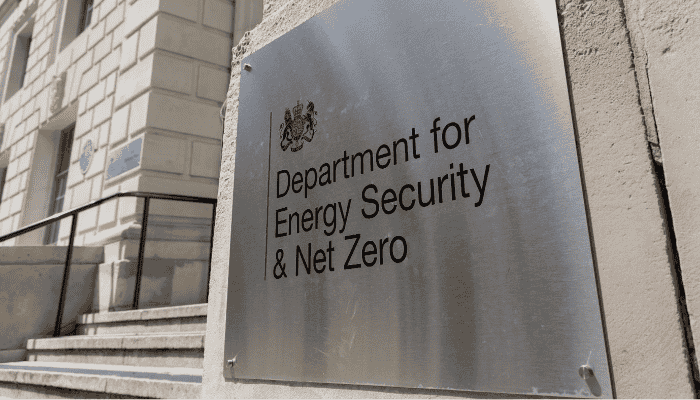
The Combined Heat and Power Quality Assurance (CHPQA) programme is administered by a private company contracted to DESNZ (the Department for Energy Security and Net Zero), operating out of offices in Didcot, Oxfordshire. Its stated purpose is to assess and certify CHP schemes as ‘Good Quality’, entitling operators to a range of financial incentives.
2.1 The Incentives on Offer
Successfully certified CHP schemes are entitled to:
- Exemption from the main rates of Climate Change Levy (CCL) on fuel — currently 0.672 pence per kWh for gas
- Exemption from Carbon Price Support (CPS) heat relief tax
- Exemption from business rates on power generating plant and machinery
These are real financial benefits. For a larger installation running 7,000 hours per year, CCL exemption alone could represent a saving of tens of thousands of pounds annually. The incentives exist because Parliament has recognised that CHP merits support.
2.2 The Mechanism for Accessing Those Incentives
To access these incentives, operators must:
- Register on the CHPQA portal (recently migrated to a new OneLogin-based system in September 2025)
- Identify which of three current Standards applies to their scheme (Issues 5, 6, or 7) — without any clear signposting
- Define a ‘CHPQA Boundary’ around the equipment, illustrated on a Scheme Line Diagram (SLD)
- Demonstrate a Power Efficiency of at least 20% to qualify for full fuel CCL exemption
- Pass a two-step Quality Index (QI) assessment based on efficiency, capacity, and fuel type
- Submit an annual self-assessment before the end of March each year
- Ensure certification is renewed before the end of June, or lose exemption from the start of that calendar year
|
The programme has its own glossary of terminology, its own mathematical thresholds, three parallel versions of its own Standard, and a helpline open Monday to Friday 9am–4pm. It is not designed for the uninitiated. |
|---|
3. How Complexity Becomes a Barrier
3.1 The Alphabet Soup of Bureaucracy
Within the CHPQA documentation, the following terms and acronyms are deployed with little explanation or context: CHPQA, CCL, CPS, QI, SLD, SoS Certificate, GN40–GN49, ‘Responsible Person’, ‘prime mover’, ‘CHPQA Boundary’, Issues 5, 6 and 7, ‘partial qualification’, ‘full qualification’, and ‘threshold levels’. Each of these requires further reading; each further reading leads to more acronyms.
This is not accidental complexity. A scheme designed to encourage uptake would minimise jargon and provide a simple decision tree. This scheme does the opposite.
3.2 The Quality Index Trap
The QI (Quality Index) is the centrepiece of the assessment. Rather than a simple pass/fail based on efficiency, it is a derived mathematical value combining overall efficiency, capacity, and fuel type — assessed against threshold values that themselves vary depending on the ‘stage of plant development and operation.’
This two-step process means that a CHP operator cannot easily determine in advance whether their installation will qualify fully, partially, or not at all. The uncertainty is not a bug — it is a feature. It creates dependency on specialist consultants and discourages self-assessment.
3.3 The Annual Deadline Trap
Certificates expire at the end of every December. Operators must submit by end of March, with processing completed by end of June. If an operator misses the March deadline, CHPQA explicitly states it will not backdate certificates. The consequence is that tax exemption is lost from 1 January of that year until the date a new certificate is issued.
|
CRITICAL: A missed submission deadline does not merely delay benefits — it eliminates them retroactively from the beginning of the calendar year. A small organisation without dedicated compliance resource could easily face a five- or six-figure tax liability for an administrative oversight. |
|---|
3.4 Three Versions of the Standard
There are currently three active issues of the CHPQA Standard (Issues 5, 6, and 7). Applicants must themselves determine which applies to their specific situation. No simple flowchart is provided. The documentation refers operators to ‘the CHPQA Standard’ for further detail — a document which itself requires expert interpretation.
3.5 The Portal Migration Problem
In September 2025, CHPQA migrated to a new online portal using the OneLogin government authentication system. Operators who had previously been registered must re-engage with the new system. At the time of migration, the programme’s own guidance pages were acknowledged as being ‘in the process of being updated.’ This means operators seeking guidance during the transition period were directed to information known to be potentially outdated.
4. The Climate Agenda and the Gas Prejudice
The CHPQA framework does not exist in a vacuum. It sits within the broader context of the UK Government’s Net Zero strategy, which has as one of its central pillars the elimination of natural gas from the energy system.
This creates a structural tension at the heart of CHP policy:
- CHP is most cost-effective and most widely deployed when fuelled by natural gas
- Natural gas CHP offers genuine, measurable carbon savings over conventional generation
- Yet Government policy is progressively hostile to natural gas in all forms
- The QI calculation factors in fuel type — meaning gas CHP is inherently disadvantaged relative to biomass or hydrogen-fuelled alternatives
The efficiency argument — that burning gas in a high-efficiency CHP unit produces less carbon per unit of useful energy than the alternative of grid electricity plus a gas boiler — is conspicuously absent from Government communications about CHP. The framework acknowledges CHP’s benefits, but declines to make the strongest case for it.
|
The Government cannot easily abolish CHP incentives — to do so would be to admit that a technology demonstrably superior to conventional generation should receive no support. Instead, the incentives are maintained but made progressively harder to access. |
|---|
The location of the CHPQA administrator — the Gemini Building, Fermi Avenue, Didcot — is, perhaps appropriately, a former coal power station town. The office hours (9am–4pm, Monday to Friday) suggest an institution not designed around the needs of its users.
5. Operating CHP Without CHPQA Registration
5.1 The Legal Position
CHPQA registration is not a legal requirement to install or operate a CHP system. It is solely the mechanism for accessing financial incentives. An organisation may install, commission, and operate a CHP unit in full compliance with the law — Gas Safe regulations, building regulations, electrical installation standards — without any reference to CHPQA whatsoever.
|
There is no law requiring CHPQA registration. The scheme is voluntary. Registration is only necessary if you wish to claim the associated tax exemptions. |
|---|
5.2 What You Lose Without Registration
The principal financial costs of non-registration are:
|
Tax / Levy |
Impact of Non-Registration |
|
Climate Change Levy (CCL) on gas |
Pay full rate: currently 0.672p/kWh |
|
Carbon Price Support (CPS) – heat relief |
No exemption on qualifying heat generation |
|
Business rates on generating plant |
Full rates payable on qualifying equipment |
For a meaningful commercial installation — say, a 100kWe CHP unit running 7,000 hours per year consuming approximately 2.5 million kWh of gas — the CCL alone would represent a cost of around £16,800 per year. This is the ‘price’ of avoiding CHPQA compliance.
5.3 The Case for Non-Registration
For many smaller or medium-sized operators, non-registration may be the rational choice. Consider the factors on the other side of the ledger:
- Annual professional fees for a CHPQA specialist consultant: potentially £1,500–£5,000 per year
- Staff time for data collection, submission preparation, and portal navigation
- Risk of missed deadlines resulting in retroactive loss of exemption — potentially exceeding the value of a year’s savings
- Cost and disruption of the recent portal migration
- Uncertainty from multiple Standards and opaque QI thresholds
For a smaller installation, the net benefit of registration may be marginal or even negative once compliance costs are fully accounted for. This is a conclusion the Government’s own framework drives operators towards.
5.4 The Behind-the-Meter Advantage
The simplest and most legally uncomplicated form of CHP operation is the ‘behind the meter’ model: a CHP unit sized to meet the site’s own heat and power demand, with little or no export of electricity to the grid. In this configuration:
- No grid export licence or Smart Export Guarantee registration is required
- No Ofgem interaction is triggered
- No CHPQA registration is needed
- The operator simply generates their own energy, displaces grid purchases, and reduces fuel consumption
The savings from avoided grid electricity purchases and reduced gas boiler consumption can be very substantial — potentially exceeding the CHPQA tax incentives for many sites — without a single form being submitted.
6. The Central Paradox: A Framework That Undermines Itself
The most telling conclusion of this analysis is also the most damning for those who designed the CHPQA framework.
A government incentive scheme exists to change behaviour — to make a desired activity more attractive than the alternative. The CHPQA scheme was created to encourage the deployment of good-quality CHP. Yet it has been constructed with such elaborate complexity, such punitive administrative deadlines, such opaque qualification criteria, and such structural hostility to natural gas that it has achieved the opposite of its stated purpose for a significant portion of its target audience.
|
“It is rather telling that the Government’s own framework inadvertently makes ignoring their incentive scheme a reasonable business decision.” |
|---|
This is not a minor design flaw. It represents either a failure of policy development — in which case it is incompetence — or a deliberate structuring of the scheme to suppress natural gas CHP deployment whilst maintaining the appearance of support — in which case it is something considerably more calculated.
The circumstantial evidence for the latter interpretation is not negligible:
- The scheme’s complexity has increased over successive iterations (now on its seventh issue of the Standard)
- The fuel-type weighting in the QI calculation disadvantages gas relative to favoured alternatives
- The CCL from which CHP seeks exemption was itself introduced partly as a disincentive to fossil fuel use
- The portal migration in September 2025 — with guidance pages acknowledged as ‘being updated’ — created a period of deliberate uncertainty for operators
- The annual renewal cycle with non-backdatable deadlines creates ongoing jeopardy that discourages long-term planning
|
A scheme genuinely designed to encourage CHP deployment would be simple to enter, clear in its criteria, generous in its deadlines, and unambiguous in its support for the technology’s most cost-effective fuel source. CHPQA is none of these things. |
|---|
7. Practical Recommendations
7.1 For Organisations Considering CHP
Any organisation evaluating CHP should conduct a clear-eyed cost-benefit analysis that separates the technology decision from the CHPQA registration decision:
- First, assess whether CHP makes economic sense on its own merits: energy savings, avoided grid purchases, reduced boiler fuel, reduced carbon. These benefits exist with or without CHPQA.
- Second, calculate the gross value of CHPQA tax incentives for your specific installation size, fuel consumption, and operating hours.
- Third, calculate the realistic cost of maintaining CHPQA compliance: consultant fees, staff time, portal management, and the risk premium for potential deadline failure.
- Fourth, compare the net benefit of registration against the cost. For smaller installations, non-registration may be the correct decision.
- Fifth, consider the behind-the-meter model as the baseline case — maximum simplicity, full legal compliance, no regulatory entanglement.
7.2 For Policy Advocates
Those who believe CHP deserves stronger support from Government should focus advocacy on the following specific failings of the CHPQA framework:
- The non-backdating rule for late submissions is disproportionately punitive and should be reformed
- The three parallel Standards should be consolidated or replaced with a single, clear, user-friendly guide
- The QI methodology should be published in a form accessible to non-specialists
- The fuel-type weighting that disadvantages natural gas should be justified transparently, or removed
- The efficiency argument — that gas CHP reduces emissions compared to conventional alternatives — should be explicitly acknowledged in Government communications
7.3 For the Government
If the Government genuinely wishes to encourage CHP deployment, the path forward is straightforward: simplify the scheme, extend the deadlines, remove the fuel-type prejudice from the QI calculation, and make the strongest possible public case for CHP’s efficiency advantages. The current framework achieves none of these.
8. Conclusion
Combined Heat and Power is one of the most mature, cost-effective, and genuinely efficient energy technologies available to UK businesses and organisations. Its efficiency advantages over conventional generation are not disputed. Its potential contribution to both cost reduction and carbon saving is substantial and demonstrable.
The CHPQA framework, ostensibly designed to support and encourage CHP deployment, has instead become a monument to regulatory complexity. Its multiple Standards, opaque Quality Index methodology, annual recertification deadlines with retroactive penalty, fuel-type prejudices, and recent portal migration have collectively created a system that deters rather than encourages participation.
The result is a policy paradox: a government incentive scheme from which it is, in many cases, more rational to opt out than to engage. For behind-the-meter operators — who need no grid licence, no Ofgem registration, and no CHPQA certification — the technology remains entirely accessible and legally uncomplicated. The savings from avoided energy costs can be realised in full, without a single submission to the Gemini Building, Didcot.
|
The most powerful statement any CHP operator can make about the CHPQA framework is to install a high-quality, behind-the-meter system, save substantial energy costs, reduce carbon emissions, comply with every applicable regulation — and never contact CHPQA at all. |
|---|
That this is not merely possible but commercially sensible for many operators is the clearest possible indictment of the framework as it currently stands.
Appendix: Glossary of CHPQA Terminology
The following terms appear in CHPQA documentation. They are listed here to illustrate the scale of terminology a new applicant must absorb before submitting their first assessment.
|
Term / Acronym |
Plain English Meaning |
|
CHPQA |
Combined Heat and Power Quality Assurance — the scheme itself |
|
CCL |
Climate Change Levy — a tax on business energy consumption |
|
CPS |
Carbon Price Support — a further tax on fossil fuel use in generation |
|
QI |
Quality Index — the combined efficiency/capacity/fuel score |
|
SLD |
Scheme Line Diagram — a drawing showing what equipment is included |
|
SoS Certificate |
Secretary of State CHP Exemption Certificate — the final certification document |
|
Responsible Person |
The individual registered as accountable for the scheme |
|
Prime Mover |
The engine or turbine that generates the electricity |
|
CHPQA Boundary |
The imaginary line drawn around qualifying equipment |
|
Issue 5 / 6 / 7 |
Three different versions of the CHPQA Standard currently in use |
|
GN40–GN49 |
Guidance Notes covering specific incentive application processes |
|
DESNZ |
Department for Energy Security and Net Zero — the sponsoring department |
|
Behind the Meter |
Generation used on-site, not exported to the grid |
|
Cogeneration |
Another term for CHP — simultaneous heat and power generation |
Note: This glossary covers only the primary terms. Full CHPQA guidance runs to multiple documents totalling hundreds of pages. Operators are expected to navigate this independently.