
The Climate Emergence/Change/Warming lobbies have a pathological aversion to what they (falsely) describe as "FOSSIL FUELS" - this inherently ant-capitalist and pro-deindustrialisation, attitude flies in the face of actual science - and is completely ignored within China where they predominantly generate electricity with Coal! Then Oil and Natural Gas
- Details
- Written by: J C Burke
- Category: Bias Against Methane
- Hits: 638
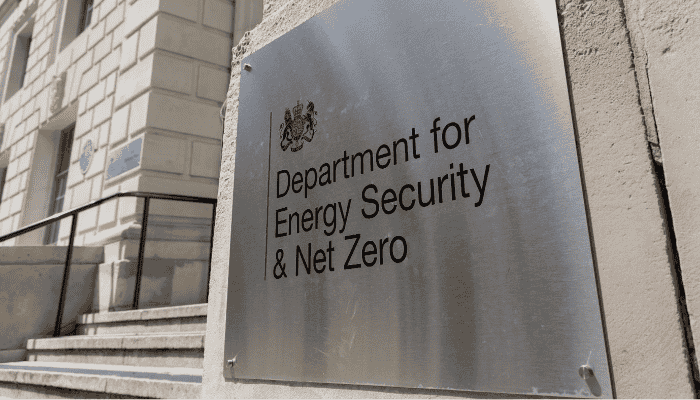 A Critical Analysis of UK Government Policy, Regulatory Obstruction
and the Case for Independent CHP Deployment
February 2026 Private & Confidential
Executive Summary
This report summarises findings from a detailed examination of the UK Government’s Combined Heat and Power Quality Assurance (CHPQA) programme — the bureaucratic gateway through which CHP operators must pass to receive financial incentives. The analysis reveals a framework that, while nominally supportive of CHP technology, has been constructed in a manner that creates substantial barriers to entry, imposes ongoing administrative burden, and ultimately makes opting out of the scheme a commercially rational decision for many operators.
The central finding of this report is striking in its irony:
|
“The UK Government’s own CHPQA framework has been designed with such complexity and administrative burden that ignoring it entirely — and simply forgoing the incentives it offers — is a reasonable and defensible business decision for many CHP operators.” |
This is not a sign of good policy design. It is the hallmark of a framework whose unstated purpose may be to discourage the very technology it purports to support — most particularly where that technology relies on natural gas.
1. What Is CHP — And Why Does It Matter?
Combined Heat and Power (CHP), also known as cogeneration, is the simultaneous generation of both electricity and usable heat from a single fuel source in a single process. This stands in contrast to the conventional approach, in which electricity is generated remotely in large power stations and heat is produced separately on-site via boilers.
The efficiency case for CHP is compelling and well-established:
- Details
- Written by: J C Burke
- Category: Bias Against Methane
- Hits: 349
THE FUNDAMENTAL TRUTH ABOUT CHP:
1. CHP burns fuel ONCE to produce electricity AND useful heat SIMULTANEOUSLY
2. The Government's allocation method (1/3 heat, 2/3 electricity) is an ACCOUNTING CONVENTION
- It exists for emissions reporting and tax calculations
- It does NOT represent actual fuel division (which is impossible)
3. The REAL benefit is THERMODYNAMIC:
- CHP typically achieves 80-90% overall efficiency
- Separate generation (grid + boiler) achieves ~55-60% combined efficiency
- This means ~30-40% LESS PRIMARY FUEL for the same useful energy
4. For UK CHP in 2024:
- Total fuel input: ~60,000 GWh
- Total useful output: ~49,000 GWh (electricity + heat)
- Overall efficiency: ~82%
- Primary energy saved: ~20,000 GWh compared to separate generation
- CO2 avoided: ~3-4 million tonnes annually
5. RECOMMENDATION: Present CHP benefits as:
- Overall system efficiency (heat + power / fuel input)
- Primary energy savings vs counterfactual
- Absolute fuel and CO2 reductions
- NOT as arbitrary fuel 'allocation' between outputs
This gives engineers, building owners, and policymakers the honest picture
they need to make informed decisions about distributed energy systems.