
 The INSANE £4 Billion Scheme to Pipe Carbon Dioxide 120 Miles That Risks Asphyxiating Those in its Path
22 February 2026 9:00 AM dailysceptic.org article 22 nd Feb 2026
Only a complete eco-nutter would want to compress carbon dioxide to dangerous asphyxiating levels and then run it through a three foot-wide near-surface metal pipe costing at least half a billion pounds, along a 120-mile path near human conurbations strewn with subsidence-causing, uncharted, ancient mines. At a hopefully intact end, the highly pressurised CO2 is then tipped into a former gas hole in the Irish Sea where over time it is likely to escape as the numerous mining caps start to fail. Add in another £4 billion for the whole pointless and potentially dangerous carbon capture project, and it is all in a day’s spending for the Miliband-led lunatics.
Small change, of course, for the lying (‘wind is cheaper than gas’), dishonest (‘grid will be 95% renewables in 46 months’ time’) freaks involved in a political attempt to wreck the British economy on the pretext that ‘settled’ science says we should all freak out about the gas of life.
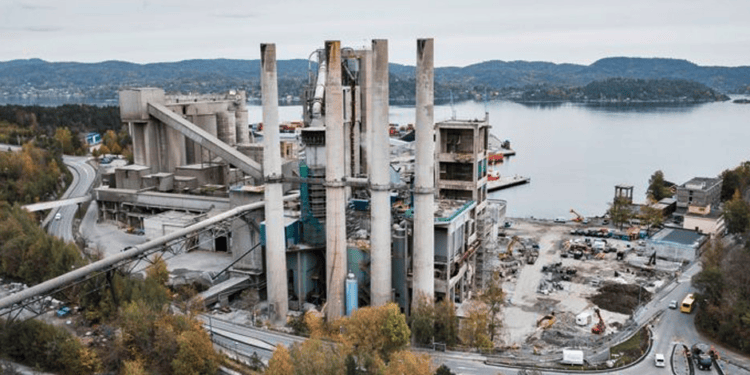
The Peak Cluster CO2 pipeline is in early planning and public consultation stages, and it aims to take the gas from four cement and lime factories in Derbyshire and Staffordshire. It will run through Staffordshire, Cheshire and the Wirral and connect to an offshore storage site in depleted gas reserves under Morecambe Bay. The pipeline is said to be the world’s largest cement decarbonisation initiative, capturing three million tonnes of CO2 a year. This amounts to just 0.00008% of global emissions, or if you prefer fractions, 1/1,266,667. The effect on any global temperature movement can fairly be said to be unmeasurable. In total, the sinister, hard-Left Net Zero minister Miliband plans to spend over £20 billion of borrowed state money to capture equally miniscule amounts of CO2 in a number of other sites over the next 20 years.
But at least impoverished UK taxpayers can sleep easy in their beds knowing they are leading the world in exciting new green technologies.
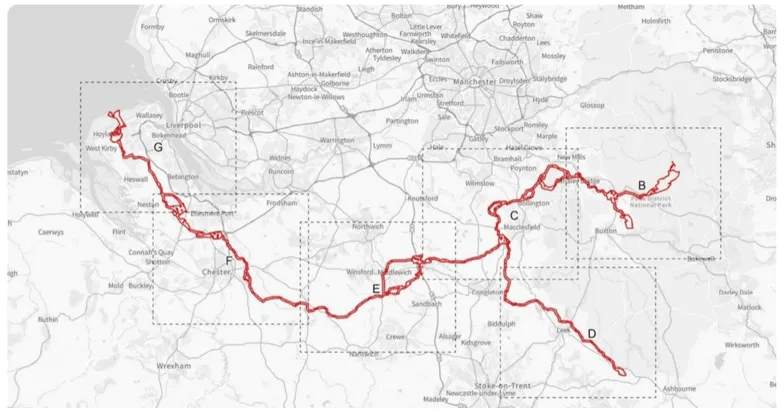 Here is the route map for the pipeline of potential death.
The pipeline will be put in a trench about three feet from the surface, although more tricky laying will be need across roads, watercourses and railway lines. A number of above-ground inspection installations are promised, while block-valve stations for the high pressure steel pipeline will be mostly buried. The route is designed to avoid densely populated areas but it does pass through the outskirts of several towns and villages. Areas on the pipeline route are likely to be Chapel-en-le-Frith, Macclesfield, Cranage, Tarporley, Picton, Ellesmere Port, Willaston and Leasowe in the Wirral.
The technology for moving gas around at pressure is well understood. Natural Gas (Methane - CH4) sometimes escapes and this can be problematic in a closed space. But natural methane gas is lighter than air and quickly disperses in open areas. In normal dilute quantities, CO2 is a harmless, non-toxic gas breathed out by humans. But it is heavier than air – nearly three times the weight of methane – and in still, windless, open air conditions it sinks like a stone to the ground, displacing oxygen, and quickly suffocates any trapped humans and animals.
If carbon capture and storage was fracking for gas, it would have been banned years ago. Pumping pressurised, suffocating gas across populated areas and tipping it into rock cavities possibly compromised by prior drilling holes might be considered slightly more dangerous than the largely invented ‘earthquakes’ said to be caused by fracking that are equivalent to someone falling off a chair. The true horror of CO2 asphyxiation was shown on August 21st 1986 with a sudden high pressure release of magmatic CO2 from the bed of Lake Nyos in Cameroon, killing all living beings in the surrounding villages, including 1,746 people.
This was a freak occurrence and would not happen on this scale with a rupture of the Peak Cluster pipeline. But danger on a smaller scale remains, particularly if the infrastructure is not expensively maintained to the highest standards. Needless to say, supporters of the scheme are downplaying any risks. The promoters make their safety claims, but they also hint at the large wasted costs needed for a project that is a massive wealth destroyer: “We will ensure rigorous monitoring mechanisms are in place along the CO2 pipeline. The operation of the pipeline will be monitored continuously, and block valves will be used to safely shut down the pipeline should the need arise”.
But local opposition to the pipeline is steadily growing. A Change.org petition [ Change Org Petition ] launched last month to stop the project, noted that a CO2 pipeline in Satartia, Mississippi, ruptured and this resulted in asphyxiation and hospitalisation of 50 people, with many suffering ongoing health issues. The accident in 2020 was caused by a weld failure in a 24-inch pipe after heavy rain caused soil movement. About 6,000 tonnes of CO2 were released, and this could have been twice that amount if a proposed 36-inch Peak Cluster pipe had been used. Other local concerns have been expressed about the construction impacts on habitats, farming land and watercourse damage. Labour Wirral councillor Mark Skillicorn observed that “Wirral should not be treated as England’s carbon dioxide dump”.
The biggest danger is probably a pipe rupture in the middle of a still night next to human habitation. Sadly, that is a possibility in areas full of unknown old mines. In July 2024, a three-foot sinkhole suddenly appeared on the A6015 Hayfield Rd. Subsequent investigation linked it to a collapsed old mining culvert about 15 feet below the surface.
The sinkhole, which took a number of weeks to repair, is located about six miles from the proposed path of the Peak Cluster pipeline.
Chris Morrison is the Daily Sceptic’s Environment Editor. Follow Chris on X.