CHP4
  • Home
  • CHP Solutions
    • What is CHP
    • Tri-Generation
    • Bio-Methane CHP
    • Efficiency Comparisons
    • UK Case Studies
  • Energy Policies
    • Power Grid Resilience
    • Net-Zero Critique
    • Decarbonization vs Waste Reduction
    • Energy Security
    • Hydrogen Future
    • Urban Heat Island Effect
  • Projects & Investment
    • Current Development
    • Joint Venture Opportunity
    • Project Enquiry
  • Resources
    • Technical Papers
    • Climate Science
    • Alternative Energy
    • Live Electricity Mix
    • Building Standards
  • About & Contact
    • About SEE Ltd
    • About QSIR & ZES Ltd
    • Contact Form
    • Consultancy Login
  1. You are here:  
  2. Home

Energy Policy Paper - CHP Emphasis

Details
Written by: John C Burke plus AI Claude research
Category: ENERGY POLICY
Published: 09 October 2025
Last Updated: 15 November 2025
Hits: 164

Energy-FlowUK Energy Security Through Distributed Combined Heat and Power

A Policy Paper for Resilient, Efficient Energy Infrastructure

Executive Summary

The April 2025 Iberian Peninsula blackout demonstrated that increasing grid complexity—driven by high renewable penetration and distributed generation—creates systemic vulnerabilities that threaten energy security. This paper proposes a fundamental paradigm shift in UK energy policy: repositioning Combined Heat and Power (CHP) and tri-generation systems as primary energy infrastructure for critical and commercial facilities, with the electricity grid serving as a balancing and coordination network rather than the sole supply backbone.

This approach simultaneously addresses energy security, system resilience, efficiency, and decarbonization objectives while reducing—rather than increasing—grid coordination complexity.

1. The Problem: Grid Complexity as Systemic Risk

1.1 Lessons from the Iberian Blackout

On 28 April 2025, Spain and Portugal experienced a total electricity system collapse affecting nearly 60 million people. Official investigations identified the root causes as:

  • Outdated voltage control regulations unsuited to distributed renewable generation
  • Inadequate reactive power management across thousands of generation points
  • Cascading failures when conventional generators with voltage control responsibilities failed
  • Grid isolation (only 2% interconnection with EU) limiting external stabilization

Key Finding: The incident was not caused by renewables themselves, but by the exponential increase in coordination complexity when managing thousands of distributed generation sources through centralized control systems.

Read more: Energy Policy Paper - CHP Emphasis

Environmental Policy

Details
Written by: J C Burke
Category: ENERGY POLICY
Published: 23 June 2025
Last Updated: 15 November 2025
Hits: 3359

AI As a Reflective Tool

Based upon our own areas of expertise and the frustrations of the Agenda driven Politicalised policies of NET Zero (see our article from 2 years ago), The Assumpitons that Net Zero is ham-strung by (December 2024 Article), Decarbonisation and Carbon Capture (which stemmed from a question from our recent Investment contact). We decided to test Artificial Intelligent {AI} to assist us with its deep research capabilities to consider how to CHANGE THE NARRATVE (Of the Politics of Climate Change Agenda).

Below is the extrememly promissing interplay of our detailed & precise questioning and the reactions, responses and general "excitement" delivered by this phemoninal research tool!

Energy Flow Chart 2023 TWh page 0001Our Opening Questions - Nice and Simple.

""'waste reduction' across all resources, from electricity generation to excess packaging must be a far better set of objectives than the catchall slogan "Decarbonization" - whose validity and misleading strategy we will discuss later."" End of initial question:

[Please Note Regarding Energy Flow Chart: data from 2023 - 2024 will be available after 31st July 2025 - Department of Energy and Net Zero.] We are unsure as to why the Dept Energy & Net Zero should take 8 months to gather this data - so here is the USA version - which is very simialar in structure {Click HERE to see USA Chart - in a not so attactive format}

AI Responce:

You raise an interesting strategic point about framing environmental policy. "Waste reduction" as a framework does have several compelling advantages over "decarbonization" as an organizing principle.

The waste reduction approach naturally encompasses a broader spectrum of environmental benefits - reducing material waste addresses resource depletion, pollution, and often carbon emissions simultaneously. When you minimize packaging, for instance, you're cutting material extraction, manufacturing energy, transportation fuel, and disposal costs all at once. Similarly, improving electrical efficiency reduces both carbon emissions and the need for additional power infrastructure.

From a political and economic standpoint, waste reduction often aligns more naturally with cost savings and efficiency gains that businesses and consumers can readily understand. Companies are generally motivated to reduce waste because it directly impacts their bottom line, whereas carbon reduction can sometimes feel like an additional cost or constraint.

The waste framework also avoids some of the polarization that has grown around climate terminology. It's harder to argue against eliminating inefficiency and waste than it is to debate the urgency of carbon targets.

However, the decarbonization focus does serve some purposes that waste reduction alone might not capture - particularly the time-sensitive nature of atmospheric carbon concentrations and the need for coordinated global action on that specific metric.

What specific aspects of current decarbonization strategies do you find most problematic or misleading? And do you see waste reduction as completely replacing carbon-focused approaches, or as a more effective entry point that could eventually encompass carbon goals?

Read more: Environmental Policy

H2 - Strategic Talking Points

Details
Written by: J C Burke
Category: Hydrogen Analysis
Published: 22 June 2025
Last Updated: 15 November 2025
Hits: 737
logo mid finalFT Hydrogen Summit: Strategic Talking Points: Core Message Framework

"I'm not anti-hydrogen - I'm pro-sequencing. Biomethane CHP is the intelligent bridge to hydrogen fuel cells. Why waste 15-20 years when we can deploy 90% efficiency systems today and transition to H2 fuel cells when they're genuinely ready?"

Primary Elevator Pitch (60 seconds)

*"I'm here because I believe in hydrogen's future - but through fuel cells, not current electrolysis systems. The intelligent pathway is biomethane CHP as the immediate bridge solution. We're literally flaring waste biomethane while debating green hydrogen infrastructure.

My specialty is Combined Heat and Power systems using biomethane - 90% efficiency available today. I'm developing a £50m care home portfolio that proves this concept. In 15-20 years, when hydrogen fuel cells achieve 50-60% efficiency, we can transition. But meanwhile, we're capturing waste energy that's currently lost. The UK has successful CHP installations in Islington, Southampton, and Woking proving this bridge strategy works now."*

Key Statistical Ammunition

  • Current hydrogen electrolysis: 25-35% efficiency vs Biomethane CHP: 80-90% efficiency
  • Future hydrogen fuel cells: 50-60% efficiency (15-20 years) vs CHP available now: 80-90%
  • UK transmission losses: 8-10% annually vs Local CHP: Zero transmission losses
  • Hydrogen infrastructure cost: £100+ billion vs CHP leveraging existing gas grid + biomethane: Fraction of the cost
  • Timeline: Green hydrogen commercial viability 2030+ vs Biomethane CHP deployment: Immediate
  • Waste biomethane: Currently flared or released vs CHP utilization: Captures waste energy streams

Read more: H2 - Strategic Talking Points

SEE Director as VIP Guest - Hydrogen Summit

Details
Written by: J C Burke
Category: Hydrogen Analysis
Published: 16 June 2025
Last Updated: 15 November 2025
Hits: 885
Power pylonsWhy the HYDROGEN Summit is Important:

Having attended the World Bio-Gas Summit at the NEC, last year it is important to keep all viable innovative options open. Whilst a big fan of Bio-Methane, we are interested to hear about Hydrogen as a fuel (but presumably not for FUSION just yet!!) Will be attending the World Bio-Gas Summit this year too [9th-10th July 2025 - Birmingham NEC]

FT Sponsored Summit:

24th June 2025; Marriott Grosvenor Square, Mayfair, London W1K 6JP

Hear from 50+ CEOs, energy innovators, policymakers and financiers
  • Explore practical hydrogen solutions that are moving from ambition to execution—addressing cost, efficiency, and real-world scalability.
  • Delve into the global hydrogen landscape and dive into regional insights from Asia, Africa, and the Middle East.
  • Unlock strategies and financial mechanisms needed to de-risk hydrogen projects, secure long-term offtake agreements, and accelerate Final Investment Decision.
Meet 250+ hydrogen pioneers under one roof
  • Access exclusive delegate matchmaking with C-suite leaders via the FT Live app—ensuring high-impact connections.
  • With 75% of attendees holding senior job titles, this is where the industry’s most influential leaders connect.
  • In an intimate setting, build business-critical relationships and kick start new business deals.
Hydrogen1A one-day strategic agenda on transitioning from hype to realism
  • Focused debates and case studies will explore hydrogen s real-world applications including success’ and setbacks.
  • Spend less time out of the office and walk away with the knowledge and clarity needed to future proof your strategy.
  • Moderated by senior FT journalists to cut through the jargon and bring you realistic opinions.
 What’s new for the Hydrogen Summit in 2025 Watch on demand
  • Hydrogen vs. Electrification Debate: A first-time discussion on where hydrogen fits in the future energy mix.
  • Success & Failure Case Studies: Learn from real-world project successes and mistakes.
  • Expanded Global Focus: Insights from Africa, the Middle East & Southeast Asia, alongside Europe & North America.
  • Dedicated Financing Discussions: New panels on addressing bankability, securing offtake agreements, and exploring alternative & blended funding models.

 FT Registration - Hydrogen Summit

Over Reliance on Electricity

Details
Written by: John Burke and AI assistance
Category: UK Energy Security
Published: 21 March 2025
Last Updated: 15 November 2025
Hits: 2301
  • Over-reliance on Electricity
  • Twin Substations did not Help
  • Resilience Issues
  • Where next to Occur?
Sub Station Fire at Hayes - Heathrow - AI Images
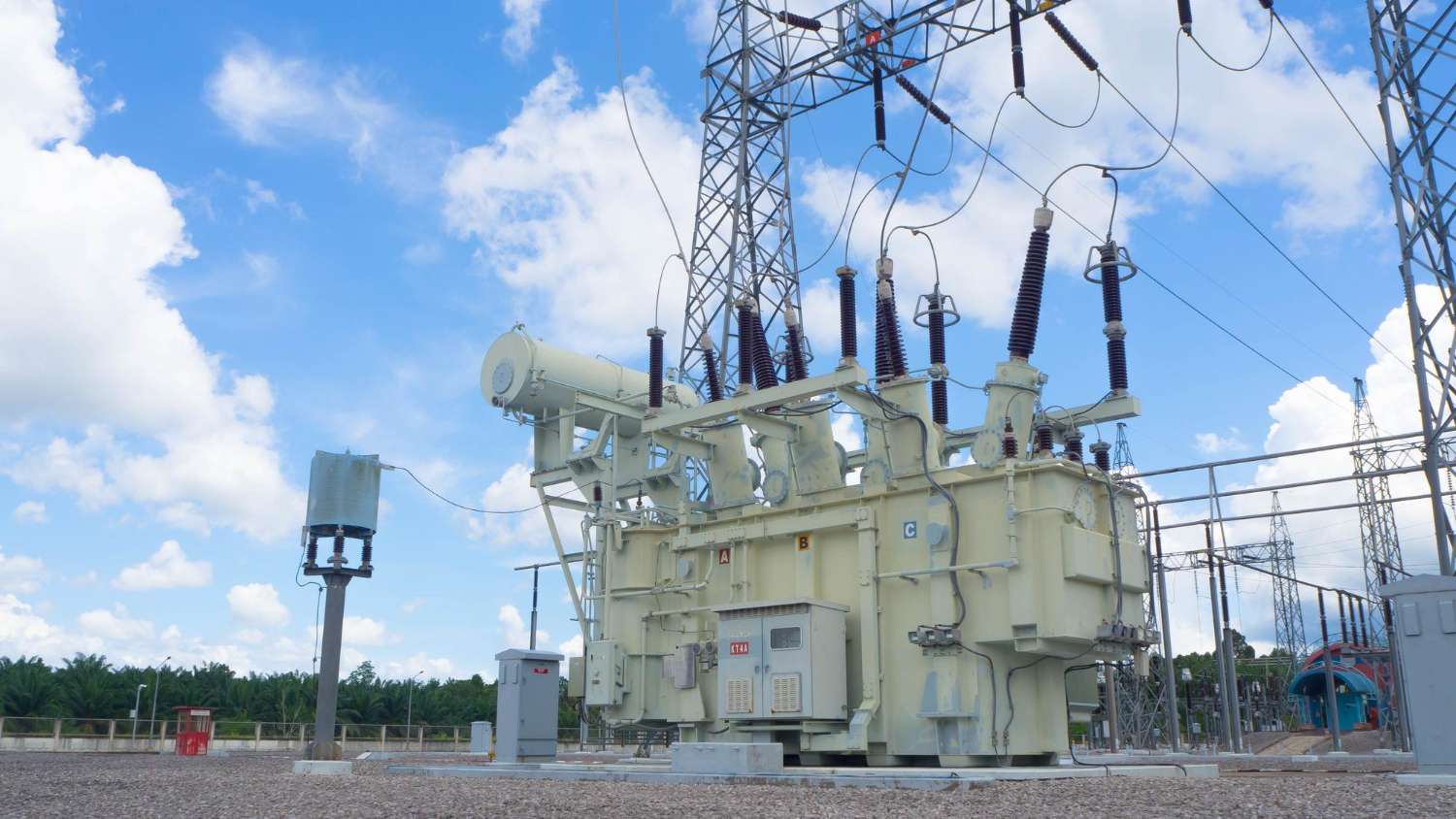
The catastrophic sub station fire in Hayes, London - which supplies Heathrow Airport has demontrated several issues.

The catastrophic substation fire in Hayes, London, on March 21, 2025, which disrupted power to Heathrow Airport and thousands of surrounding homes, has exposed critical vulnerabilities in the region’s energy infrastructure. This incident has grounded flights, affected over 1,300 scheduled operations, and highlighted systemic issues in power supply reliability, backup systems, and resilience planning. The key issues demonstrated by this event and additionally Combined Heat and Power (CHP) as a potential alternative, focusing on its relevance to this scenario.

Issues Demonstrated by the Hayes Substation Fire
  1. Single Point of Failure in Power Infrastructure
    The fire at the North Hyde substation, which supplies Heathrow—one of the world’s busiest airports—revealed a significant dependency on a centralized power source. When the substation failed, it not only cut power to the airport but also impacted over 16,300 homes initially, with around 4,900 still without power by early Friday morning. The fact that a single incident could paralyze such a critical transport hub and a large residential area underscores the fragility of relying heavily on one substation without sufficient redundancy.
  2. Inadequate Backup Systems
    UK Energy Secretary Ed Miliband noted that the fire was so severe it damaged "the potential backup generation" for Heathrow, rendering contingency measures ineffective. This suggests that the existing backup systems—likely diesel generators or secondary grid connections—were either insufficiently robust or too closely tied to the primary substation’s infrastructure. The inability to quickly switch to an alternative power source prolonged the airport’s closure and disrupted global travel networks.
  3. Logistical and Economic Fallout
    The closure of Heathrow until midnight on March 21 has led to over 1,300 flight cancellations or diversions, stranding passengers and creating a "logistical nightmare" for airlines. The ripple effects extend globally, with flights from as far as Singapore, the US, and Australia diverted or canceled. Locally, the power outage disrupted businesses and households, amplifying the economic cost. This highlights the broader consequences of energy infrastructure failures in critical areas.
  4. Lack of Resilience to Extreme Events
    Despite upgrades to the North Hyde substation in 2021, which included new transformers and circuits to enhance reliability, the system still succumbed to a "catastrophic" fire. The cause remains under investigation, but the incident raises questions about whether current infrastructure is designed to withstand rare but severe events—whether accidental, environmental, or otherwise. Aging equipment could further exacerbate such risks.
  5. Delayed Response and Recovery
    Although the London Fire Brigade brought the blaze under control by 6:28 GMT, power restoration efforts by National Grid have been slow, with no clear timeline for full recovery. This reflects challenges in repairing complex electrical infrastructure under emergency conditions and the difficulty of rerouting power from alternative sources in a timely manner.
Combined Heat and Power (CHP) as an Alternative

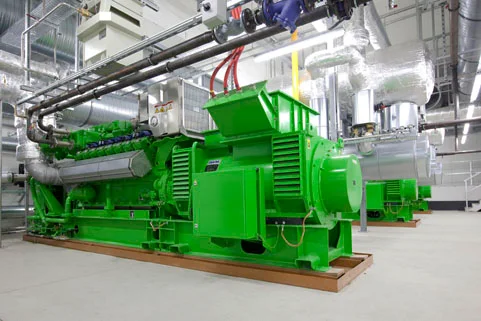
Combined Heat and Power (CHP), also known as cogeneration, is a decentralized energy system that simultaneously generates electricity and useful heat from a single fuel source, typically natural gas, biomass, or biogas. Unlike traditional power plants that waste heat as a byproduct, CHP captures it for heating or cooling purposes, achieving efficiencies of up to 80-90% compared to 30-50% for conventional grid systems. Here’s how CHP could address the issues exposed by the Hayes fire, with emphasis on its potential role at Heathrow and beyond:

  1. Decentralized Power Generation
    Installing CHP units at or near Heathrow could reduce reliance on a single external substation like North Hyde. By generating power on-site, the airport could maintain operations during grid failures, mitigating the single-point-of-failure risk. For instance, a CHP plant sized to meet Heathrow’s base load (estimated at tens of megawatts for such a large facility) could keep critical systems—runways, terminals, and air traffic control—running independently.
  2. Enhanced Backup and Resilience
    CHP systems can serve as a robust backup or primary power source, operating in "island mode" during outages. Unlike the compromised backup generators in this incident, a well-designed CHP system could be isolated from external grid failures and fueled independently (e.g., via gas pipelines or stored fuel). Pairing CHP with battery storage could further ensure uninterrupted power during transitions or fuel supply disruptions.
  3. Energy Efficiency and Cost Savings
    Heathrow’s extensive heating and cooling needs—terminals, hangars, and support facilities—make it an ideal candidate for CHP. The captured heat could replace less efficient boilers, reducing energy costs and carbon emissions. For example, a gas-fired CHP unit could supply electricity to the airport while piping hot water or steam to heat buildings, cutting reliance on grid electricity and standalone heating systems.
  4. Reduced Grid Strain
    By generating power locally, CHP could alleviate demand on the National Grid, particularly during peak times or emergencies. This would benefit surrounding areas like Hayes and Hounslow, where thousands of homes lost power. A network of smaller CHP installations across critical infrastructure and communities could distribute the load, preventing widespread outages when a substation fails.
  5. Environmental Benefits
    While the immediate focus post-fire is reliability, CHP offers a greener alternative to traditional grid power, especially if fueled by renewable biogas or paired with solar thermal systems. Heathrow, which handled 83.9 million passengers in 2024, has sustainability goals that CHP could support by lowering its carbon footprint compared to coal- or gas-heavy grid electricity.
Challenges of Implementing CHP in This Context
  • Initial Investment: Retrofitting Heathrow with CHP requires significant upfront costs for equipment, installation, and integration. However, long-term savings and reliability gains could justify this, especially for a high-stakes facility.
  • Space Constraints: Airports are space-intensive, and finding room for CHP units could be tricky, though modular systems exist that might fit within existing infrastructure.
  • Fuel Dependency: Most CHP systems rely on natural gas, introducing a dependency on gas networks or storage. Diversifying fuel sources (e.g., biogas, oil, aviation fuels, or hydrogen(??)) could mitigate this.
  • Regulatory and Planning Hurdles: Deploying CHP would need approval from local authorities, National Grid, and aviation regulators, potentially delaying implementation.
Conclusion

The Hayes substation fire has laid bare the risks of centralized power dependency, inadequate backups, and insufficient resilience in critical infrastructure like Heathrow Airport. CHP offers a compelling alternative by decentralizing power generation, enhancing efficiency, and providing a reliable backup. For Heathrow, a tailored CHP system could ensure operational continuity during grid failures while supporting sustainability goals. Beyond the airport, deploying CHP in surrounding areas could bolster community resilience, reducing the cascading impacts seen in this incident. While not a panacea, CHP merits serious consideration as part of a broader strategy to rethink energy infrastructure in the wake of such a disruptive event.

  • An Holistic Approach to City Re-Development

Page 3 of 10

  • 1
  • 2
  • 3
  • 4
  • 5
  • 6
  • 7
  • 8
  • 9
  • 10

Smart Search


Advanced Search

Latest Articles

  • Anaerobic Digestion (AD) and biogas industry
  • AI and EV Infrastructure Needs
  • Alberta Changes the CO2 imperative
  • An Holistic Approach to City Re-Development
  • Anaerobic Digestion for CHP Fuels

Copyright © 2009-2026 CHP4.org (including Sun Earth Energy Ltd/ Qsir Ltd/ Zero Energy Systems Ltd All Rights Reserved.  X/Twitter)
Now Running Joomla 6.0.2 | Updated: 7th January 2026

  • About Us
  • T and Cs